"If America Fails?: The Coming Tyranny" ::: Examining "The Handmaid’s Tale". . .the fictional story that explores the real potential of the U.S. as a failed state.
@ASoulAFire @JaniceOCG VISIT our Facebook page to learn more about us, keep up on news and events, and engage in chat on “If America Fails?”
IF AMERICA FAILS?: The Coming Tyranny, is produced by “TruthWorks Network,” the Black Voice Collaborative where the truth MUST be spoken more than once. We provide “Truth Talk Therapy for Strong and Empowered Communities,” as we link the best of Black dialogue and exchange. Rational, informed and solution-based interchange for serious talk at every level.
@ASoulAFire @JaniceOCG See Contents of “The Handmaid’s Tale: Teaching Dystopia” to see wide range of themes & content covered in TV show, @HandmaidsOnHulu.
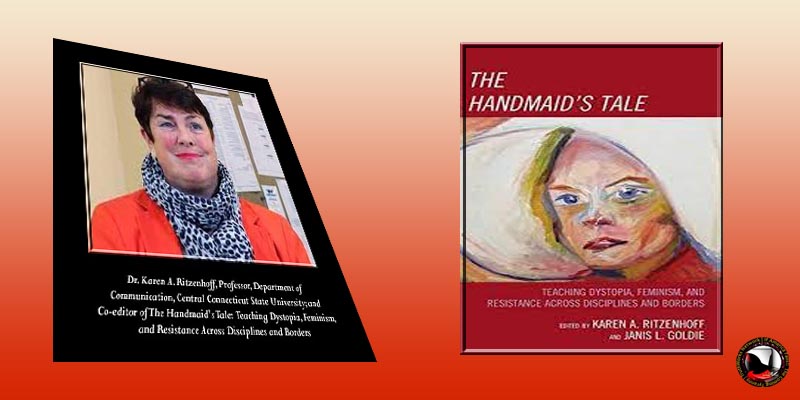
The Table of Contents from The Handmaid’s Tale: Teaching Dystopia, Feminism, and Resistance Across Disciplines and Borders, edited by Karen A. Ritzenhoff and Janis Goldie, offers a glimpse into the wide range of themes and content covered in the TV show, “The Handmaid’s Tale” on Hulu. These are some of the themes we will explore in the new webcast series, “If America Fails? The Coming Tyranny,” launching on October 14th.
The Handmaid’s Tale: Teaching Dystopia, Feminism, and Resistance Across Disciplines and Borders, edited by Karen A. Ritzenhoff and Janis Goldie
Table of Contents
Chapter 1: The Handmaid’s Tale as a Teaching Tool for Engaging Students in Colonial American History and Puritanism
Chapter 2: Translation and Adaptation Matters: About the Differences Between a Story Called The Handmaid’s Tale or The Slave-girl’s Tale?
Chapter 3: Jezebel’s: Sex and Marriage in Early Christian Theology
Chapter 4: Literary Narration, Complicity, and Political Dystopia in Margaret Atwood’s The Handmaid’s Tale
Chapter 5: “You don’t know what we had to go through:” Feminist Generations in The Handmaid’s Tale
Chapter 6: “Don’t Let the Bastards Grind you Down”—Again: Returning to The Handmaid’s Tale
Chapter 7: Consent, Power, and Sexual Assault in The Handmaid’s Tale: Handmaids, Sexual Slavery and Victim Blaming
Chapter 8: Advancing Student Understanding of Rape Culture: The Handmaid’s Tale as a Tool in the Primary Prevention of Sexual Assault on College Campuses
Chapter 9: Fertility and Fetal Containers: Science, Religion, and The Handmaid’s Tale
Chapter 10: “I’m Ravenous for News”: Using The Handmaid’s Tale to Explore the Role of Journalism
Chapter 11: Women’s Health in The Handmaid’s Tale and the Marginalization of Women
Chapter 12: Resist!: Racism and Sexism in The Handmaid’s Tale
Chapter 13: Erasing Race in The Handmaid’s Tale
Chapter 14: Women, Complicity and The Handmaid’s Tale
Chapter 15: “Discards, All of Us”: Representations of Age in The Handmaid’s Tale
Chapter 16: No Light Without Shadow: The Question of Realism in Volker Schlöndorff’s The Handmaid’s Tale and Hulu’s TV Series
Chapter 17: Shifting Perspectives and Re-accentuation: Adapting The Handmaid’s Tale as Film in 1990 and as a Hulu TV Series in 2017/2018
Chapter 18: The Handmaid’s Tale: The Optics of Dystopia
Chapter 19: Offred’s Journey Through Gilead: Subverting Oppositional Discourse Through First Person Performed Narrative
Chapter 20: The Artist and Her Art: An Examination of Elisabeth Moss as Peggy Olson and June Osborne through a Feminist Lens
Chapter 21: ‘The Magical Land of the North’: Anti-Americanism and Canadian Identity within The Handmaid’s Tale
Chapter 22: Suffering Motherhood and Woman’s Empowerment: Comparing Metropolis (1927) and The Handmaid’s Tale (2017)
Chapter 23: ‘Topia’ Extended: “Historical” Judgment of The Handmaid’s Tale
SEE Guest Resource | Table of Contents | The Handmaid’s Tale: Teaching Dystopia, Feminism, and Resistance Across Disciplines and Borders | edited by Karen A. Ritzenhoff and Janis Goldie | Lexington Books | 6/1/2019
@ASoulAFire @JaniceOCG @chrislynnhedges @kthalps @mtaibbi Violent language among Americans, at the grocery store, movie theater and on the steps of Congress, are more than a good show or an outlet for our frustrations. Violent language is prelude to war. That’s what experience says.
“I watched Yugoslavia divide until you had these completely polarized, antagonistic camps that were speaking to each other in the language of violence. And I know from covering war that it becomes a very short step. Once you begin to speak in the language of violence to actually carrying out violence and that’s what’s happening.”
— Chris Hedges
However, knowing it and stopping it are two different things. Is there a way to prevent war when one or more parties seem determined to fight…when our beliefs, values, and perceptions differ wildly…when a few benefit greatly by war, as others pay heavy tolls? Is it more logical, if tied to a train track, to keep our eyes open as the train approaches swiftly, or to cover our eyes and wait on the coming death? Are we powerless to stop the coming war…or do we have agency in the role we play in setting the stage for war?
I’d like to believe we have agency – but, I know it’s more complex than that. It’s more complicated than even understanding the motives and drivers of those who seek war. We have been warned, but I wonder what we do with that warning. I suppose it’s up to each one of us to choose our response – as if we have a choice – fight or flight – war or peace – life or death. In the coming civil war, we will be forced to choose sides.
I hope we are clear about what we value, what we want to support, the kind of world we want to see, and what we are willing – and unwilling – to do, in the war to define who America will be. — LMO
@ASoulAFire @JaniceOCG Host @Molly_Kaplan interviewed Kimberlé Crenshaw @SandyLocks for the @ACLU on the issue being made over Critical Race Theory in recent weeks.
The thing about privilege, IMHO, is that it breeds discontent in those who don’t have it, and sets the stage for a host of other problems. For instance, privileging some people with access to quality education, while leaving others to manage as best they can with sub-standard services is a social issue with consequences for us all. We see it in the arguments over the new vaccine – and we see it in the fights over CRT.
It seems some of us have a need to feel special, better than and more privileged than others – but when we share a planet or are crowded into boundaries called countries, inevitably we will rub shoulders and exert an influence on our experience as human beings.
Sometimes we are better off when things are shared, like quality educational services – because it takes decades to see the impact of what happens when we don’t.
“27 state legislatures and 165 national and local organizations have made efforts to restrict education on racism.”
“Lawmakers, parents, think tanks, and conservative pundits have waged a war over how to teach students about systemic racism. As of this recording, 27 state legislatures and 165 national and local organizations have made efforts to restrict education on racism. As a result, school board members have been ousted, and some educators have resigned over the death threats, social media bullying, and harassment they’ve received from those who are adamant that teaching a more inclusive history harms students.
“These activists and lawmakers have centered much of their anger on a framework called Critical Race Theory. Though they’ve used it as a catchall for wokeness, political correctness, and leftist indoctrination, the term actually refers to a body of legal scholarship from the 70s and 80s that says racism is not just a result of individual prejudice, but something embedded in the legal system and in government policy.
“Our guest today Kimberlé Crenshaw was among the scholars who developed the theory. She also coined the term ‘intersectionality,’ a framework that takes into account how a person’s identities combine to create unique forms of discrimination or privilege.
“She is a Distinguished Professor of law at Columbia University and at UCLA, co-founder of the African American Policy Forum at Columbia, and host of the podcast ‘Intersectionality Matters.’
“She joins us to help us understand the true meaning of Critical Race Theory and how it became a political flashpoint in schools and beyond.”
“Molly Kaplan is the Director of Multimedia for the ACLU and the host of At Liberty. She’s an Emmy-winning director who since 2012, has directed, executive produced, filmed, and edited hundreds of videos. Her work – in collaboration with some of the most talented filmmakers and animators…”
@ASoulAFire @RedResistancep1 Here’s a Season 2 trailer on @HandmaidsOnHulu to refresh our memories in the lead up to the 10/14 sneak peek of If America Fails? by by @JaniceOCG & @Odomanian from Black POV.
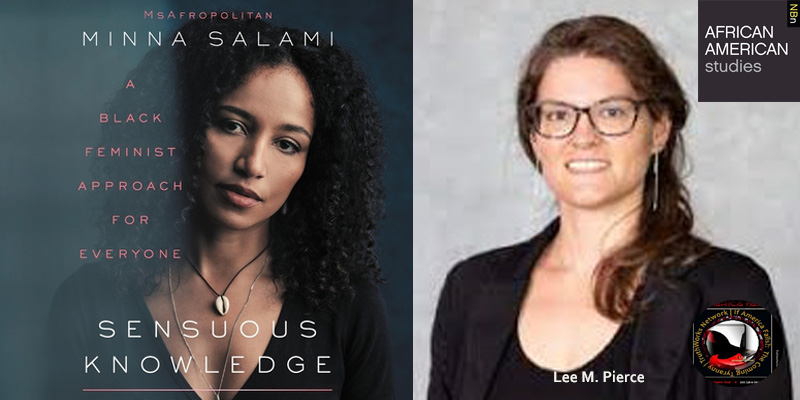
@ASoulAFire @JaniceOCG Quite thoughtfully, host @RhetoricLee interviews Minna Salami, @MsAfropolitan on her new book, Sensuous Knowledge: A Black Feminist Approach for Everyone (Amistad, 2021), for @NewBooksAfroAm. Treat yourself to a sensuous listen!
The gender divide we see in the fictional story, “The Handmaid’s Tale,” we know is only too real, and after centuries of struggle, some days it’s hard to see what progress we’ve made. In “If America Fails?: The Coming Tyranny” certainly gender issues will be explored. Will we find any answers? Perhaps “Sensuous Knowledge” is the key. Indulge!
“Minna Salami’s book Sensuous Knowledge: A Black Feminist Approach for Everyone (Amistad/HarperCollins, 2021) is a collection of thought provoking essays that explore questions central to how we see ourselves, our history, and our world.
-What does it mean to be oppressed?
-What does it mean to be liberated?
-Why do women choose to follow authority even when they can be autonomous?
-What is the cost of compromising one’s true self?
-What narratives particularly subjugate women and people of African heritage?
-What kind of narrative can heal and empower?
“As she considers these questions, Salami offers fresh insights on key cultural issues that impact women’s lives, including power, beauty, and knowledge. She also examines larger subjects, such as Afrofuturism, radical Black feminism, and gender politics, all with a historical outlook that is also future oriented. Combining a storyteller’s narrative playfulness and a social critic’s intellectual rigor, Salami draws upon a range of traditions and ideologies, feminist theory, popular culture—including insights from Ms. Lauryn Hill, Beyoncé, Audre Lorde, Toni Morrison, and others—science, philosophy, African myths and origin stories, and her own bold personal narrative to establish a language for change and self-liberation.
“Sensuous Knowledge inspires reflection and challenge us to formulate [or] own views. Using ancestral knowledge to steer us toward freedom, Salami reveals the ways that women have protested over the years in large and small ways—models that inspire and empower us to define our own sense of womanhood today.
“In this riveting meditation, Salami ask women to break free of the prison made by ingrained male centric biases, and build a house themselves—a home that can nurture us all.”
@Praisebebitch @JaniceOCG @ASoulAFire VISIT our website to learn more about us, keep up on news and events, and engage in chat on “If America Fails?” from Black POV about @HandmaidsOnHulu.
IF AMERICA FAILS?: The Coming Tyranny, is produced by “TruthWorks Network,” the Black Voice Collaborative where the truth MUST be spoken more than once. We provide “Truth Talk Therapy for Strong and Empowered Communities,” as we link the best of Black dialogue and exchange. Rational, informed and solution-based interchange for serious talk at every level.
@ElisabethMossN @ASoulAFire @JaniceOCG Check out the reviews of “The Handmaid’s Tale: Teaching Dystopia, Feminism, and Resistance Across Disciplines and Borders,” edited by Karen A. Ritzenhoff and Janis Goldie. @Ritzenhoffk will join If America Fails? on October 14th for the sneak peek of the new web series analyzing current events in comparison to “The Handmaid’s Tale” through the lens of the Black experience. See you then!
“In an age where savage neoliberalism, climate change denial and lack of consideration for basic human rights seem bent on imposing their logic over the Western world, The Handmaid’s Tale: Teaching Dystopia, Feminism, and Resistance Across Disciplines and Borders, edited by Karen A. Ritzenhoff and Janis L. Goldie, is a staunch confirmation of the relevance not only of Margaret Atwood’s 1985 The Handmaid’s Tale, but of dystopian fiction in general. Offering multiple entries into the novel and its two adaptations through a wide array of methodologies (adaptation studies, criminology, cultural studies, etc.), this book is an ideal companion for a class on The Handmaid’s Tale or the relationship between feminism and popular culture.” — David Roche, Université Toulouse – Jean Jaurès
“Who would have thought that The Handmaid’s Tale would become a ‘how-to’ manual for contemporary existence? But if that’s where we are today, then this book is an essential ‘how-to’ manual for understanding not only The Handmaid’s Tale, but the dystopia that has become our reality.” — Dahlia Schweitzer, Author of Going Viral: Zombies, Viruses, and the End of the World
“A truly interdisciplinary, extremely timely and a thorough study of what has already become a canonical text about women’s visibility and voice. This book is a great addition to feminist television studies and an excellent volume on the teaching feminism as activism. The chapters in the volume cleverly situate The Handmaid’s Tale in the context of #MeToo and #timesup, and remind us once again that as academics, we are change agents.” — Eylem Atakav, The University of East Anglia
“The Handmaid’s Tale: Teaching Dystopia, Feminism, and Resistance across Disciplines and Borders offers an interdisciplinary analysis of how Margaret Atwood’s The Handmaid’s Tale, as well as its film and television adaptations, can be employed across different academic fields in high school, college and university classrooms. Scholars from a variety of disciplines and cultural contexts contribute to wide-ranging analytical strategies, ranging from religion and science to the role of journalism in democracy, while still embracing gender studies in a broader methodological and theoretical framework. The volume examines both the formal and stylistic ways in which Atwood’s classic work and its adaptations can be brought to life in the classroom through different lenses and pedagogies.” –The Publisher
Karen A. Ritzenhoff is professor in the Department of Communication at Central Connecticut State University.
Janis L. Goldie is associate professor and chair of the Department of Communication Studies at Huntington/Laurentian University.
Contributions by Christina Barmon; Michelle Cubellis; Sarah Dodd; Cecilia Gigliotti; Susan N. Gilmore; Janis Goldie; Ellen Grabiner; Jessica Greenebaum; Rati Kumar; Kristine Larsen; Charisse Levchak; Kelly Marino; Jacqueline E. Maxwell; Kate McGrath; Aven McMaster; Beth Merenstein; Paul Moffett; Heather Munro Prescott; Karen A. Ritzenhoff; Eileen Rositzka; Theodora Ruhs; Sheila Siragusa; Katherine Sugg; Clementine Tholas; and Dennis Tredy.
MARK YOUR CALENDAR NOW for the online launch of “If America Fails?: The Coming Tyranny.” Join us for a SNEAK PEEK – Thursday, October 14, 2021, 8:00 pm ET in the Zoom chatroom; or WATCH the LIVE CHAT on the TruthWorks NetworkYouTube Channel or Black Women in the Prism Facebookpage.
@TheOfcast @ASoulAFire Wickenden interviews @EOsnos for @NewYorker on the timely topic of “American Rage.” If you’re trying to wrap your head around this growing phenomena, take a listen. “If America Fails” with @JaniceOCG & @Odomanian look at rage in @HandmaidsOnHulu from Black POV.
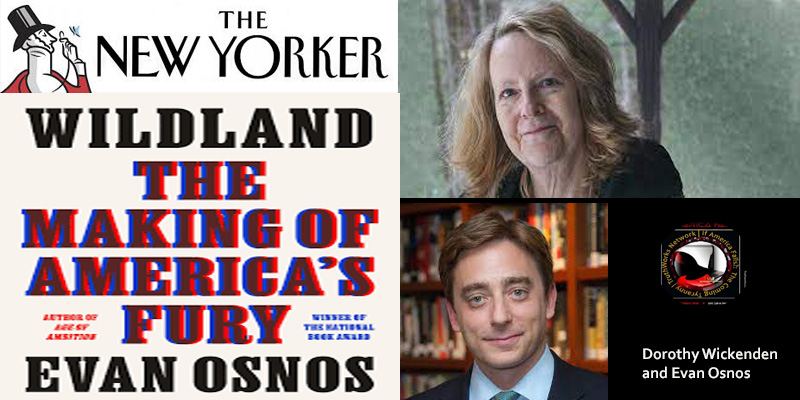
Dorothy Wickenden interviews @EOsnos for @NewYorker on the timely topic of “American Rage.” If you’re trying to wrap your head around this growing phenomena, take a listen. While we’re thinking about it, in what ways did rage play a role in the creation of the new society of Gilead, in “The Handmaid’s Tale.” We’ll look at that question in the webcast series, “If America Fails? The Coming Tyranny.”
“Over the past year, public meetings have become scenes of chaos. Debates about the results of the 2020 election, race, abortion, voting access, and the COVID-19 vaccine have erupted in displays of frustration, rage, and sometimes in violence. This week, Evan Osnos, a New Yorker staff writer, published Wildland: The Making of America’s Fury. It’s a portrait of a country in political and moral crisis. Osnos joins Dorothy Wickenden to discuss the roots of American fear and anger, and what the current manifestations of such emotions reveal about dangerous fault lines in the U.S.”










 If America Fails?