“Selling Sex on Screen: From Weimar Cinema to Zombie Porn,” co-edited by Karen A. Ritzenhoff and Catriona McAvoy

“Elusive and beguiling, the image of the woman whose body may be bought has permeated film culture since the silent era. Selling Sex on Screen, in a rich collection of penetrating studies, demonstrates how pervasive the motif is and how diverse its manifestations within the motion picture and television industries of evolving capitalist societies.”  — Russell Campbell, author of Marked Women: Prostitutes and Prostitution in the Cinema

“Whether in mainstream or independent films, depictions of female prostitution and promiscuity are complicated by their intersection with male fantasies. In such films, issues of exploitation, fidelity, and profitability are often introduced into the narrative, where sex and power become commodities traded between men and women.

In Selling Sex on Screen: From Weimar Cinema to Zombie Porn, Karen A. Ritzenhoff and Catriona McAvoy have assembled essays that explore the representation of women and sexual transactions in film and television. Included in these discussions are the films Breakfast at Tiffany’s, Eyes Wide Shut, L.A. Confidential, Pandora’s Box, and Shame and such programs as Buffy the Vampire Slayer and Gigolos. By exploring the themes of class differences and female economic independence, the chapters go beyond textual analysis and consider politics, censorship, social trends, laws, race, and technology, as well as sexual and gender stereotypes.

“By exploring this complex subject, Selling Sex on Screen offers a spectrum of representations of desire and sexuality through the moving image. This volume will be of interest not only to students and scholars of film but also researchers in gender studies, women’s studies, criminology, sociology, film studies, adaptation studies, and popular culture.”  –The Publisher

“Karen A. Ritzenhoff is professor in the Department of Communication at Central Connecticut State University. Ritzenhoff is the coeditor of Heroism and Gender in War Films (2014) with Jakub Kazecki; Border Visions: Diaspora and Identity in Film (2013) with Jakub Kazecki and Cynthia J. Miller; Screening the Dark Side of Love: From Euro- Horror to American Cinema (2012) with Karen Randell; and Sex and Sexuality in a Feminist World (2009) with Katherine Hermes. In 2011, she also coedited a special media journal, Augenblick: Images of the Iraq War (with Angela Krewani).

“Catriona McAvoy is a filmmaker based in London. She runs a digital onset and lab services company, First-Light.tv. She wrote a chapter in the book Stanley Kubrick: New Perspectives (2015) and interviews with cast and crew in Studies in the Horror Film: The Shining Vol. 1 & 2 (2015), as well as an article in the forthcoming “Kubrick and Adaptation” special issue in the journal Adaptation (2015).”  –The Publisher

#SellingSexonScreen #KarenARitzenhoff #CatrionaMcAvoy

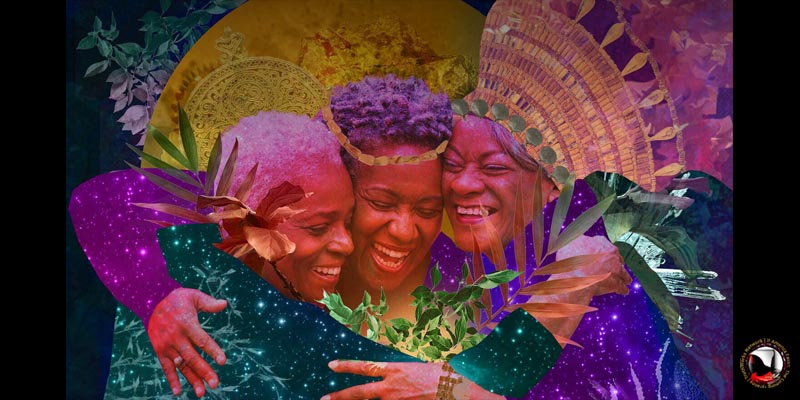
Ransby Boldly Imagines A Black Future

“We want you to know first and foremost that you are with us every day. Your presence permeates the new history books we have written, but more importantly, we pay tribute to you in the ways in which we are repairing and acting as stewards of the land, the rivers, the birds and the wildlife. Your beauty flows through the clean skies and waterways— luxuries you were denied in your time. We have many holidays and celebrations where we remember and honor you. August 10 is Pueblo Revolt Day. December 13 is Ella Baker Day. (Just two examples.)”

— Barbara Ransby

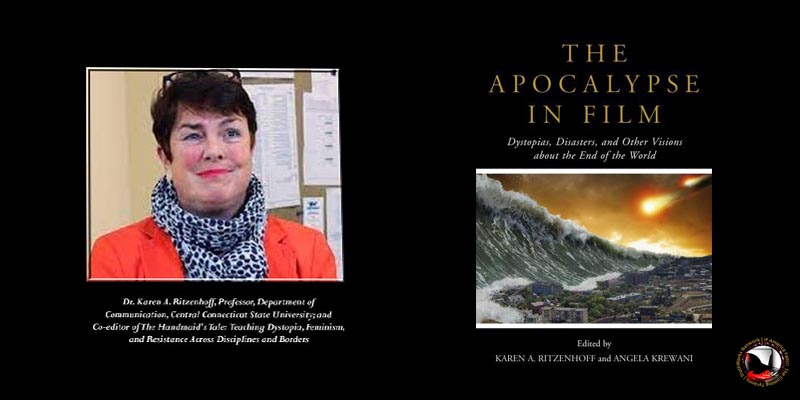
“The Apocalypse in Film: Dystopias, Disasters, and Other Visions about the End of the World,” co-edited by Karen A. Ritzenhoff and Angela Krewani

This is one of the books “If America Fails?:  The Coming Tyranny” featured panelist, Dr. Karen A. Ritzenhoff, co-edited.  Ritzenhoff will join the panel for the October 14th Sneak Peek of “If America Fails?”

“Ritzenhoff and Krewani introduce and present essays on the ‘filmic and narrative representations of contemporary catastrophes,’ including television programs, digital media, and even action figures associated with those media. Since ‘apocalypse’ can mean different things—destruction, devastation, disaster, revelation—the contributors of the 15 essays go in a variety of directions in exploring their subjects. Several essays treat Lars von Trier’s Melancholia (2011), an international art film that renewed critical interest in apocalyptic cinema. Other films covered include The Four Horsemen of the Apocalypse (Rex Ingram, 1921), Dr. Strangelove (Stanley Kubrick, 1964), and The Sacrifice (Andrei Tarkovsky, 1986). Also considered are zombies in Night of the Living Dead (George Romero, 1968) and The Walking Dead (Frank Darabont, 2010). An intriguing essay by Frederick Wasser shows how producer Irwin Allen’s disaster films (e.g., The Towering Inferno, 1974) were rendered obsolete by Steven Spielberg’s Jaws (1975). This collection joins Kristen Moana Thompson’s Apocalyptic Dread: American Film at the Turn of the Millennium.  (CH, Nov’07, 45-1383), another readable, exciting work on films about last things. Film stills are well chosen…Summing Up:  Recommended. All readers.”  — Choice

“We live in a world at risk. Dire predictions about our future or the demise of planet earth persist. Even fictional representations depict narratives of decay and the end of a commonly shared social reality. Along with recurring Hollywood blockbusters that imagine the end of the world, there has been a new wave of zombie features as well as independent films that offer various visions of the future.

“The Apocalypse in Film: Dystopias, Disasters, and Other Visions about the End of the World offers an overview of Armageddon in film from the silent era to the present. This collection of essays discusses how such films reflect social anxieties—ones that are linked to economic, ecological, and cultural factors. Featuring a broad spectrum of international scholars specializing in different historical genres and methodologies, these essays look at a number of films, including the silent classic The Four Horsemen of the Apocalypse, the black comedy Dr. Strangelove or: How I Learned to Stop Worrying and Love the Bomb, the Mayan calendar disaster epic, 2012, and in particular, Lars Von Trier’s Melancholia, the focus of several essays.

“As some filmmakers translate the anxiety about a changing global climate and geo-political relations into visions of the apocalypse, others articulate worries about the planet’s future by depicting chemical warfare, environmental disasters, or human made destruction. This book analyzes the emergence of apocalyptic and dystopic narratives and explores the political and social situations on which these films are based. Contributing to the dialogue on dystopic culture in war and peace, The Apocalypse in Film will be of interest to scholars in film and media studies, border studies, gender studies, sociology, and political science.”  –The Publisher

“Karen A. Ritzenhoff is professor in the Department of Communication at Central Connecticut State University and is also affiliated with the Women, Gender and Sexuality Studies Program. She is the co-editor of Screening the Dark Side of Love: From Euro-Horror to American Cinema (2012) and Selling Sex on Screen: From Weimar Cinema to Zombie Porn (Rowman & Littlefield, 2015)…Angela Krewani is professor for Media Studies at Philipps University in Marburg, Germany. She is the co-editor of Hollywood – Recent Developments (2005) and McLuhan’s Global Village Today (2014).”  –The Publisher

#TheApocalypseinFilm #KarenARitzenhoff #AngelaKrewani

Janelle Monáe – Say Her Name (Hell You Talmbout) (feat. Various Artists) [Official Lyric Video]

Violence against women comes in many forms – and sometimes, women simply disappear, almost with no questions asked.  As we ponder what life in Gilead would look like for Black people, we have real-world experience to draw on in our reactions to women who are victimized in physically violent and deadly ways. A key tool in fighting fascism is speaking up about the injustice we see all around us.  Janelle Monáe has done a masterful job in setting this practice to music.  #RekiaBoyd #SayHerName  — LMO

“Please join us and the African American Policy Forum in this rally cry as we #SayHerName on International Daughters Day honoring the Black women and girls who lost their lives to police violence.  Learn more about how you can get involved here: https://www.aapf.org/shnadvocate “Say Her Name (Hell You Talmbout) [feat. Prof. Kimberlé Crenshaw, Beyoncé, Alicia Keys, Chloe x Halle, Tierra Whack, Isis V., Zoë Kravitz, Brittany Howard, Asiahn, Mj Rodriguez, Jovian Zayne, Angela Rye, Nikole Hannah-Jones, Brittany Packnett-Cunningham, Alicia Garza]”  — Janelle Monáe

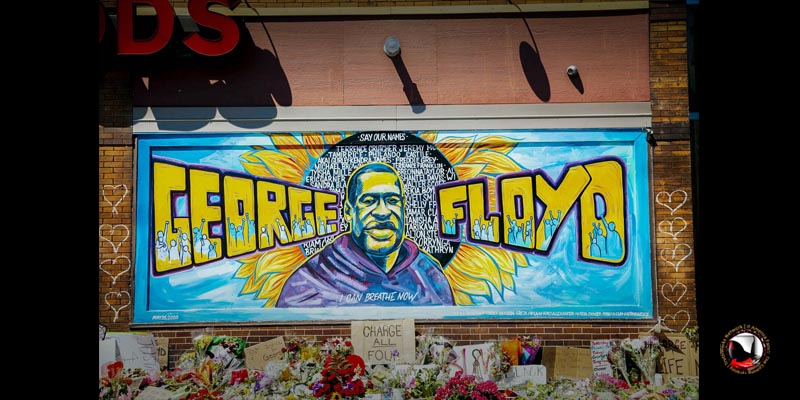
No Easy Victories

“We understand that abolition is the long game. We’re in it for as long as it takes…We’ve spent this past year getting familiar with the legal roadblocks thrown up by bureaucrats afraid of change, and devising methods to thwart them. We know what we’re doing in Minneapolis matters to other defund and abolition efforts, from New York to London to Los Angeles, and we are committed to the continued organizing it will take to make real our vision.”

— Kandace Montgomery and Miski Noor

On Centering Black Women in Fight for Reproductive Justice

“With this new wave of criminalization against abortion access and reproductive health in Texas, it is imperative we center Black people of all genders and utilize reproductive justice as a key framework and praxis in our resistance. Unfortunately, the white cis-heteronormative feminist washing of the abortion rights movement has often overlooked and excluded Black trans people, women, non-binary people, and gender-expansive people’s intersectional experiences regarding reproductive access, health, and justice. For example, Black women are more likely to live in states that heavily restrict access to abortion, are more likely not to have health insurance, and cannot afford birth control…Reproductive justice means rejecting and transforming the past exclusionary narratives that we have consistently been offered. It means not focusing solely on the idea of choice within the abortion rights and reproductive rights movement. It means recognizing Black women and gender expansive people’s leadership in the enduring fight for reproductive justice, care, and access because we have always been at the forefront of the movement. It means imagining a space and a world where all people can truly have equitable access and be free. We need reproductive justice, not just rights.”  — Karla Mendez

See full article at link below.

Bravo! Fair Fight Action Releases #CivicsForTheCulture Video Education Series

“Series provides basic educational tools to keep young people of color engaged in the political process.

“ATLANTA — Today, Fair Fight Action’s Civics For the Culture released its first in an eight-part series of videos for 18-35 year-olds across the South, including Georgia, North Carolina, Mississippi, South Carolina, and Alabama. Fair Fight Action will prioritize these videos in social media posts and digital ads across the South to deepen engagement amongst young people who are often overlooked in between elections. The first video, released today, features Civics For the Culture co-creator, Chelsey Hall, and founder of Fair Fight Action, Stacey Abrams.

“’In 2020 and 2021, young people, especially young people of color showed up, showed out and voted in record numbers. Instead of celebrating this milestone, Republican state legislators are introducing an unprecedented number of anti-voter bills to stifle our collective power,’ said Chelsey Hall, head of Media and Brand Partnerships at Fair Fight Action. ‘Civics for the Culture is one way young people can fight back. We break down complex topics and give guidance on how to activate our communities that will ensure young people have what they need to make their voices heard in our democracy.’”  — Fair Fight Action See more of press release and link to video at the link below.

On Remembering the “Day of Rage” – Jan. 6th

The characters Rita and Moira in “The Handmaid’s Tale,” strike me as representations of people who are doing their best to bury the very painful memories of life in the Republic of Gilead.  It’s understandable – we can’t experience a happy, healthy life if we’re stuck in the past replaying our traumas…so the popular wisdom goes.  I get it.  The urge to move on is strong, and our brains actually protect us from consciousness around things we can’t handle.  I’m sympathetic.

At the same time, some of us have the capacity and the need to stay alert to the potential of coming trauma – or “The Coming Tyranny” – and to sling mud at the walls or do whatever we can think of to try to slow it down or prevent it from overtaking all of us.  We know how hard it is to escape authoritarian rule, once captured.  Black people have some experience with that.

We can’t all do the same things, and it’s OK.  We’re built that way.

However, for those of us who want to remember what we saw with our own eyes on January 6th in the United States of America – scenes of mobs storming the U.S. Capitol building, breaking into offices, hunting down Representatives, beating and killing police officers, and oh yeah – spreading feces on the walls – I am grateful we have this 40-minute video by The New York Times, “Day of Rage:  An In-Depth Look at How a Mob Stormed the Capitol,” to refer to whenever our memories start to wane.  Corporate mass media, it appears, is not going to help keep these images in the forefront.  Thank you, NYT.  — LMO

“A six-month Times investigation has synchronized and mapped out thousands of videos and police radio communications from the Jan. 6 Capitol riot, providing the most complete picture to date of what happened — and why.”

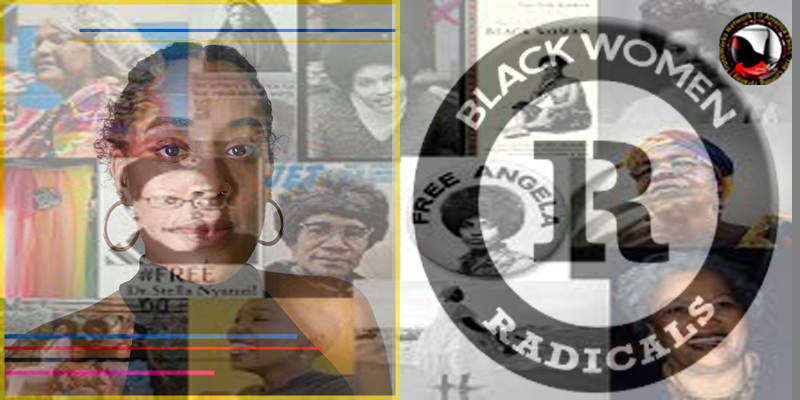
Looking Closely at Black Womens’ Activism

“Despite Black women’s immense contributions, even today — a time of unprecedented awareness of the Panthers — their work within the organization remains hidden by a focus on male leaders’ advocacy of self-defense above and beyond any other legacy.

“I see parallels in the Black Lives Matter movement— although, in this case, visibility of women is not hidden behind prominent male leaders. Rather, the work of the Black women who launched the initial call and the large number organizing at the grassroots — often to defend the lives of Black men, as with the Panther women — is hidden in plain sight, eclipsed by political abstractions.”  — Robyn C. Spencer

The Handmaid’s Tale: Season 2 RECAP by Man Of Recaps

“Welcome back to the Republic of Gilead, where everything is still awful! June is pregnant now, and she does not want to have a baby in this place. Can she escape, or will her story continue into a season 3!?”  — Man Of Recaps